
How to Choose Orthopedic Implants and Instruments Worldwide?
Choosing orthopedic implants and instruments worldwide requires more than comparing prices, materials, or product catalogs. Clinical needs should guide every decision. A trauma surgeon may need a locking plate for a complex fracture, while a joint replacement team may prioritize precise alignment tools. Small details matter, including instrument balance, surface finish, packaging, and compatibility with existing systems.
Reliable selection begins with verified evidence. Review clinical data, manufacturing controls, sterilization methods, and traceability records. Confirm that suppliers provide clear technical files and consistent batch documentation. Local regulatory requirements also deserve careful attention. Approval in one market does not automatically establish suitability in another. Hospitals should assess supplier training, product availability, complaint handling, and emergency support before signing agreements.
Experience often reveals practical problems that brochures overlook. A trial instrument may feel awkward in a gloved hand. A case may be delayed by missing screws or unclear labeling. Ask surgeons, nurses, procurement teams, and biomedical engineers to test the complete system, not isolated products. No checklist is flawless. Some evaluations may still rely on limited data or personal preference. That weakness should be recorded, discussed, and reviewed over time.
The best orthopedic implants instruments support safe procedures, predictable performance, and responsible long-term care. Selection teams should compare documented evidence with real operating-room experience. They should also consider training, maintenance, inventory control, and patient follow-up. Independent professional advice can strengthen difficult decisions. Careful judgment remains essential, especially when suppliers make impressive claims without sufficient proof.
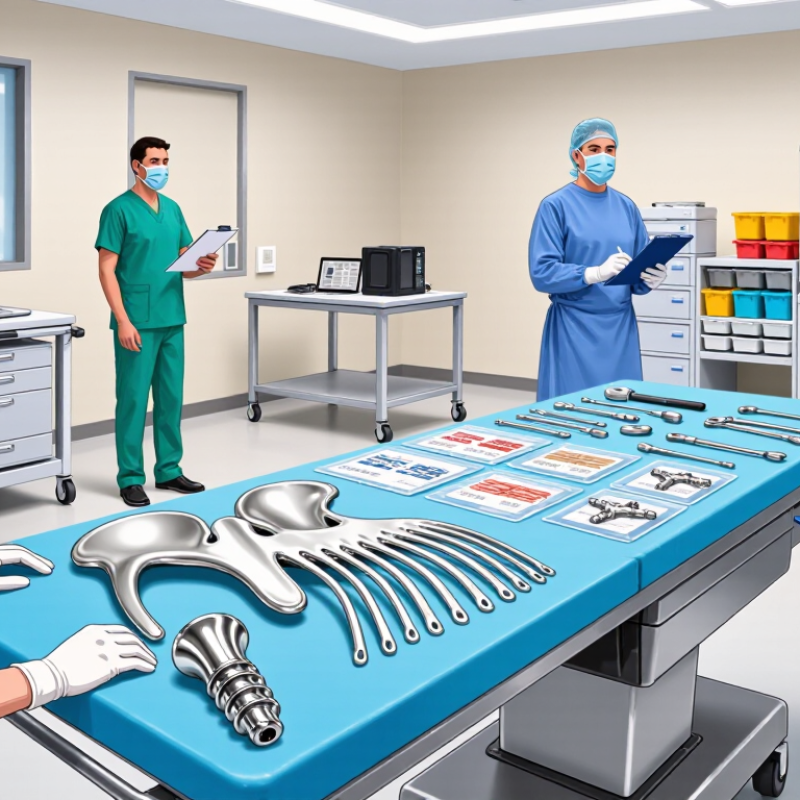
Defining Clinical Needs and Implant Selection Criteria
Choosing orthopedic implants begins with the patient, not the catalogue. Define the clinical problem in measurable terms. Is the goal fracture stability, joint reconstruction, deformity correction, or pain reduction? Review radiographs, CT findings, bone density, activity level, allergies, and previous surgery. A small detail matters. Poor metaphyseal bone may require a different fixation strategy than a simple fracture suggests. The surgeon should record the intended load, fixation method, surgical approach, and acceptable revision options.
Selection criteria should combine clinical evidence with practical constraints. Compare material properties, geometry, size range, fixation surfaces, and instrument compatibility. Confirm that every component matches the planned technique. Instrument ergonomics matter during a long procedure. So does cleaning. The hospital must verify validated reprocessing instructions, traceability, sterile packaging, and staff training. Independent clinical literature and current regulatory documentation deserve more weight than promotional claims. Local approval requirements also vary, so procurement teams should check them before shipment or use.
A useful review includes the surgeon, radiologist, operating-room nurse, biomedical engineer, and procurement lead. Discuss failure modes openly, including loosening, malposition, infection, breakage, and difficult revision. No checklist is perfect. I would question any selection based only on price or familiarity. A promising design can still fail when sizing is limited or instruments are unavailable. Simulated planning, templating, and a documented backup implant can expose these weaknesses before surgery. Cross-border supply planning should consider language, training, replacement parts, and delivery delays. Patient consent should explain expected benefits, realistic risks, and alternatives clearly.
How to Choose Orthopedic Implants and Instruments Worldwide? - Defining Clinical Needs and Implant Selection Criteria
| Clinical Need / Procedure | Common Implant Category | Typical Patient and Anatomical Factors | Key Implant Selection Criteria | Material and Fixation Considerations | Essential Instrument Requirements | Verification and Procurement Checks |
|---|---|---|---|---|---|---|
| Long-bone fracture fixation Examples include femoral, tibial, and humeral fractures. |
Locking plates, compression plates, intramedullary nails, screws, and associated end caps. | Fracture pattern, bone quality, soft-tissue condition, canal anatomy, open versus closed injury, and expected load. | Anatomical contour, plate length, hole configuration, angular stability, nail diameter and length, screw options, and compatibility with minimally invasive techniques. | Titanium alloys may offer lower modulus than stainless steel; stainless steel provides high strength and established radiographic visibility. Choose locking or conventional fixation according to stability needs and bone quality. | Reduction tools, targeting guides, radiolucent or image-compatible accessories, depth gauges, drill guides, calibrated drills, torque-limiting drivers, and extraction tools. | Confirm implant–instrument compatibility, sterilization instructions, available sizes, radiographic planning support, regulatory authorization, and local service for urgent trauma cases. |
| Joint replacement Hip, knee, shoulder, or other reconstructive arthroplasty. |
Modular joint replacement systems with bearing components, stems, shells, trays, liners, or glenoid components. | Age, activity level, deformity, bone stock, ligament status, alignment, range of motion, and revision risk. | Restoration of anatomy, size range, offset and alignment options, constraint level, wear characteristics, modularity, fixation method, and revision flexibility. | Common combinations include cobalt-chromium or titanium alloy components with polyethylene or ceramic bearing elements. Cemented, press-fit, or hybrid fixation should reflect bone quality and surgical plan. | Trial components, alignment guides, reamers, broaches, impactors, extraction instruments, cementing accessories where applicable, and dedicated sizing tools. | Review validated sizing charts, compatible combinations, contraindications, revision availability, instrument completeness, cleaning validation, and training requirements. |
| Spinal stabilization and fusion Degenerative disease, deformity, trauma, or instability. |
Pedicle screw–rod systems, interbody cages, plates, hooks, connectors, and bone-graft delivery instruments. | Level of disease, bone density, spinal alignment, neural anatomy, deformity, prior surgery, and need for decompression or correction. | Screw diameter and length range, polyaxial or fixed-angle options, rod contouring, reduction capability, radiographic markers, cage footprint, height, and lordotic angle. | Titanium alloys are widely used for spinal implants; polymer or porous metal cages may be selected according to imaging, structural support, and fusion objectives. Fixation must account for osteoporotic bone. | Screwdrivers, awls, taps, feelers, rod benders, persuaders, reduction tools, torque-limiting handles, radiographic markers, and navigation or targeting accessories when required. | Check system compatibility across screw, rod, connector, and instrument sizes; verify imaging compatibility, navigation workflow, sterilization capacity, and availability of revision components. |
| Small-joint and extremity reconstruction Hand, wrist, foot, ankle, and selected elbow procedures. |
Mini-fragment plates, cannulated screws, staple systems, arthrodesis plates, tendon anchors, and small joint implants. | Small bone dimensions, limited soft-tissue coverage, joint surface condition, deformity, activity demands, and neurovascular considerations. | Low-profile design, precise sizing, contourability, screw trajectory, compression capability, soft-tissue protection, and availability of left/right or anatomical variants. | Titanium or stainless-steel alloys are commonly used. Select fixation strength and profile according to bone size, loading, and risk of prominence or irritation. | Fine retractors, small-diameter drills, depth gauges, guide wires, countersinks, low-profile drivers, compression devices, and instruments designed for limited exposure. | Confirm fine-size availability, left/right options, guide-wire compatibility, instrument ergonomics, cleaning access, and the availability of sterile or loaner sets where relevant. |
| Osteoporotic or poor-quality bone | Locking constructs, cement-augmented fixation systems where indicated, expandable fixation devices, or larger load-sharing constructs. | Low bone mineral density, elderly patients, metabolic bone disease, revision surgery, or compromised cortical purchase. | Pull-out resistance, load distribution, fixed-angle stability, augmentation indications, cement handling requirements, and risk of adjacent structure injury. | Material selection should be considered together with construct design. Augmentation materials require clear indications, delivery control, curing characteristics, and awareness of leakage risks. | Controlled cement delivery tools, depth-control instruments, locking drill guides, torque-limiting drivers, and instruments that reduce unnecessary bone removal. | Review contraindications, augmentation instructions, radiographic monitoring needs, training, emergency removal capability, and documented evidence for the intended anatomical application. |
| Revision and salvage surgery | Revision stems, augments, cones, cages, custom-fit components, bone-loss management systems, and extraction accessories. | Existing implant position, bone loss, infection status, fracture, instability, scar tissue, retained hardware, and previous surgical approach. | Modularity, fixation in remaining bone, compatibility with primary components, extraction strategy, defect classification, and ability to manage unexpected intraoperative findings. | Material and fixation should support extended fixation or structural reconstruction. Cemented and uncemented options depend on anatomy, bone stock, and surgeon assessment. | Universal extraction tools, trephines, flexible osteotomes, back-slap devices, burrs, revision trials, long reamers, and instruments for damaged or inaccessible components. | Confirm retrieval support, compatibility with legacy components, availability of multiple sizes, contingency instruments, sterilization turnaround, and technical assistance for complex cases. |
| Minimally invasive or navigation-assisted procedures | Implants designed for percutaneous insertion, minimally invasive plating, navigation-guided fixation, or robotic and image-guided workflows. | Limited surgical exposure, challenging anatomy, need for reduced tissue disruption, and availability of intraoperative imaging or navigation. | Targeting accuracy, guide stability, radiographic visibility, access length, implant insertion profile, workflow efficiency, and compatibility with imaging or navigation systems. | Radiopaque markers and compatible metallic materials may assist visualization. The implant must maintain required mechanical performance despite smaller access pathways. | Percutaneous sleeves, targeting arms, guide wires, cannulated instruments, navigation arrays, calibrated instruments, and soft-tissue protection devices. | Validate software and instrument versions, imaging workflow, calibration, sterilization of tracking components, backup instruments, and staff competency before clinical use. |
| Global hospital and health-system procurement | Standardized implant portfolios with modular size ranges, reusable instrument trays, and procedure-specific configuration options. | Local disease burden, surgeon experience, operating-room capacity, patient demographics, reimbursement environment, and regional supply constraints. | Clinical performance, regulatory status, total cost of ownership, size coverage, inventory reliability, training, service response, traceability, and continuity of supply. | Require documented material composition, implant longevity data, sterilization compatibility, packaging integrity, and clear instructions for use. Avoid selecting solely on purchase price. | Evaluate tray weight, instrument count, cleaning complexity, ergonomics, maintenance requirements, loaner-set logistics, and compatibility with existing operating-room equipment. | Verify jurisdiction-specific registration, quality-system certification, clinical evidence, adverse-event reporting, UDI or equivalent traceability, import documentation, warranty terms, and replacement lead times. |
Note: Implant and instrument selection must be made by qualified clinicians based on patient-specific anatomy, diagnosis, surgical technique, applicable regulations, and the current manufacturer instructions for use.
Related Posts
-
Top Tips for Choosing the Right Orthopedic Plates for Your Needs
-
How to Choose the Right Spinal Instruments for Surgery?
-
Top 10 Orthopedic Surgical Instruments for Global Buyers?
-
How to Choose Orthopedic Surgical Instruments?
-
How to Choose the Right Orthopedic Instruments?
-
2026 Best Orthopedic Plates for Enhanced Healing and Recovery?